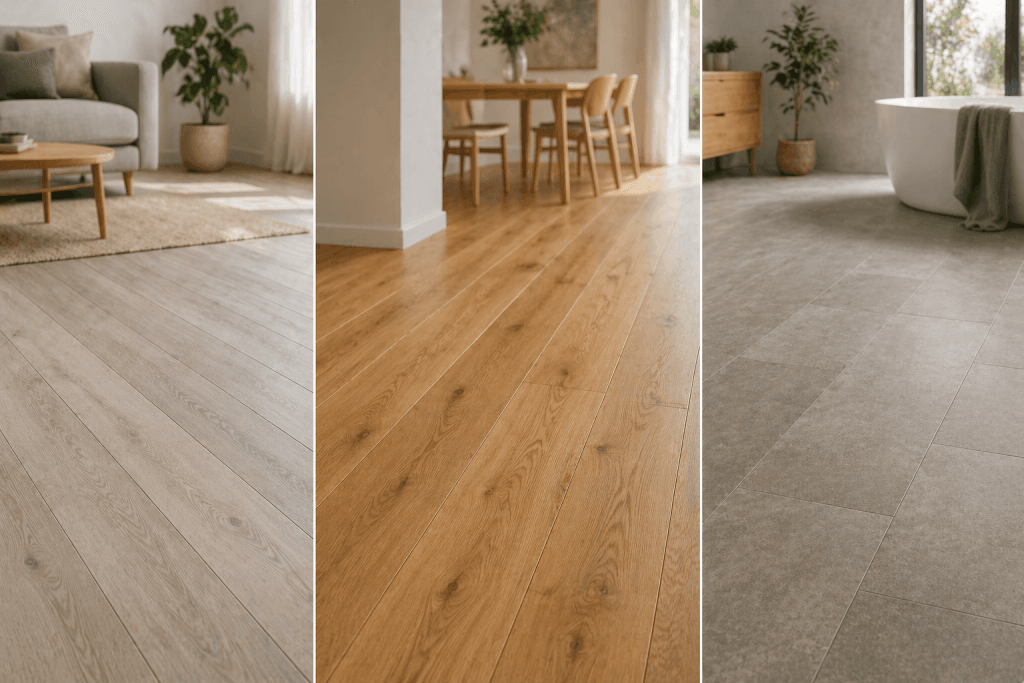
Wood Laminate Flooring Explained –
Hardwood vs Laminate & LVT
Laminate flooring, often referred to as wood laminate flooring, is one of the first options homeowners consider when upgrading their floors. It is widely available, cost-effective, and designed to replicate the look of real timber flooring.
However, when you look beyond the surface, there are important differences between laminate flooring, engineered wood flooring, and luxury vinyl tile (LVT) that can significantly impact how your floor looks, feels, and performs over time.
This guide breaks down what wood laminate flooring is, how it compares to real hardwood and modern alternatives like LVT, and which option is best suited to your home.
What is Laminate Flooring?
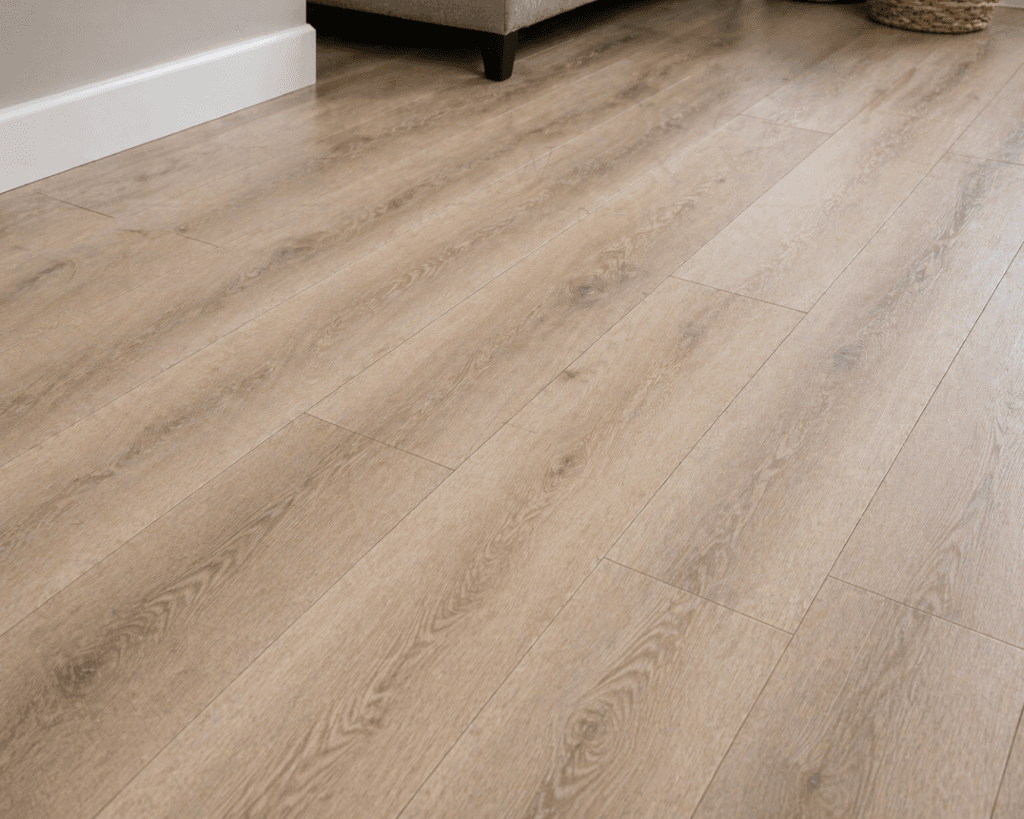
Laminate flooring, sometimes called wood laminate flooring, is a synthetic flooring product designed to imitate the look of timber at a lower price point. While it can visually replicate wood, it does not contain any real timber on the surface.
Laminate flooring is a synthetic product made up of multiple layers, typically including:
- A photographic layer that mimics wood or stone
- A core board (usually high-density fibreboard)
- A protective wear layer on top
It’s designed to give the appearance of timber flooring at a lower price point.
Pros of Laminate Flooring
- Cheaper when compared to hardwood flooring
- Scratch-resistant surface
- Easy click-lock installation
- Wide range of colours and styles
Cons of Laminate Flooring
- Cannot be sanded or refinished
- Susceptible to moisture damage
- Can sound hollow underfoot
- Doesn’t have the same warmth or authenticity as real wood
- Cannot be repaired – damaged boards must be replaced
- Shorter lifespan that engineered wood flooring
The term wood laminate flooring is commonly used to describe laminate flooring products that replicate the appearance of timber species such as oak, walnut, or ash. Despite the name, the visible surface is a printed decorative layer rather than real wood.
What is Engineered Wood Flooring?
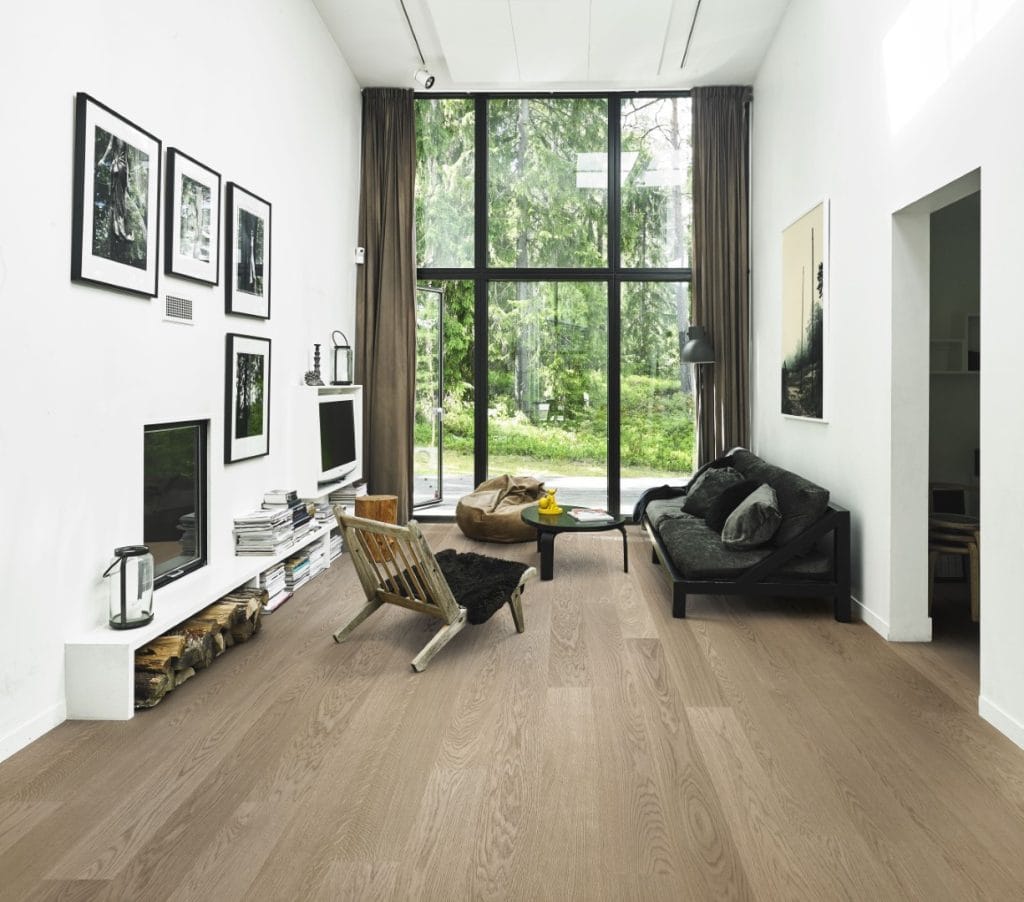
Engineered wood flooring is made from real timber, with a solid hardwood surface layer bonded over a stable core.
Unlike laminate, what you see on the surface is genuine wood – not a printed image.
Engineered wood is often considered the modern alternative to traditional hardwood flooring, combining the beauty of real timber with improved stability.
Pros of Engineered Wood Flooring
- Real timber appearance and texture
- Can be sanded and refinished (depending on thickness)
- Adds long-term value to your home
- Warmer and more natural underfoot
Cons of Engineered Wood Flooring
- Higher upfront cost than laminate
- Requires more care around moisture
- Professional installation recommended
What is LVT (Luxury Vinyl Tile)?
LVT is a modern flooring solution made from durable vinyl layers, designed to replicate wood or stone while offering excellent water resistance.
Pros of LVT Flooring
- Highly water-resistant (ideal for kitchens and bathrooms)
- Durable and low maintenance
- Softer and quieter underfoot than laminate
- Stable in changing temperatures
Cons of LVT Flooring
- Not real wood
- Cannot be refinished
- Slightly different feel compared to timber
Key Differences Between Laminate, Engineered Wood and LVT
Appearance
Laminate flooring and wood laminate flooring use a printed image layer, while engineered wood features real timber. LVT sits in between, offering highly realistic finishes but still being a synthetic product.
Durability
All three options are durable, but in different ways. Laminate resists scratches, LVT handles moisture best, and engineered wood offers long-term durability through refinishing.
Water Resistance
- Laminate flooring: Low water resistance and prone to swelling
- Engineered wood flooring: Moderate resistance with proper care
- LVT flooring: High water resistance and ideal for wet areas
Feel Underfoot
Engineered wood provides the most natural feel, followed by LVT. Laminate can feel harder and more hollow.
Laminate Flooring vs Hardwood Flooring
Laminate flooring, including wood laminate flooring products, and hardwood flooring are often compared because they can look similar at first glance, but they are fundamentally different products.
Laminate flooring:
- Synthetic construction with a printed wood image
- Lower upfront cost
- Cannot be refinished
- Shorter lifespan
Hardwood / Engineered wood flooring:
- Real timber surface
- Adds value to your home
- Can be sanded and refinished
- Longer lifespan
While laminate flooring can be a practical short-term option, hardwood and engineered wood flooring are generally considered the better long-term investment.

Where Each Flooring Type Works Best
Laminate Flooring
- Rental properties
- Low-traffic areas
- Budget-focused renovations
Engineered Wood Flooring
- Living rooms and bedrooms
- High-end residential homes
- High traffic commercial premises
- Spaces where natural timber is a priority
LVT Flooring
- Kitchens
- Bathrooms
- Entryways and high-moisture areas
What About Oak Laminate Flooring?
Oak laminate flooring and oak wood laminate flooring are popular search terms because oak is one of the most desired timber looks.
While oak laminate flooring can achieve a similar colour and style, it lacks the natural variation, depth, and longevity of real oak timber.
If you’re drawn to the look of oak, engineered oak flooring is a significantly better long-term option. It provides:
- Authentic grain and texture
- The ability to refinish over time
- A more premium finish that adds value to your home

Feature Use Case – Achieving the Oak Look
If your goal is to achieve a timeless oak aesthetic, there are two main approaches:
- Wood laminate flooring option: Lower upfront cost, but limited lifespan and no ability to restore
- Engineered oak flooring: Higher upfront investment, but longer lifespan and a far more natural finish
For most homeowners, engineered oak flooring delivers better value over time – both in performance and appearance.
Should You Choose Laminate Flooring?
Laminate flooring or wood laminate flooring can be a practical choice where budget is the primary concern or for short-term applications such as rental properties.
However, for you’re looking for a solution that offers longevity, performance, and a more premium finish, engineered wood or LVT are typically the better options.
- Choose engineered wood for authentic timber and long-term value
- Choose LVT for durability and moisture-prone areas
FAQs About Laminate Flooring
No – laminate flooring is not fully waterproof and can be damaged by moisture if exposed for extended periods.
Laminate flooring is more affordable upfront, but hardwood and engineered wood flooring offer better longevity, value, and the ability to be refinished.
Oak laminate uses a printed image of oak, while real oak flooring is made from genuine timber and can be refinished.
It can be used with care, but LVT is generally a better option for moisture-prone areas.
Engineered wood flooring and hardwood flooring generally last the longest, especially when properly maintained and refinished over time.
There is generally no difference. Wood laminate flooring is simply another term used to describe laminate flooring that is designed to look like real timber.
No. Wood laminate flooring uses a photographic layer that replicates the appearance of timber. Unlike engineered wood flooring, it does not have a real timber surface.
Looking for a Better Alternative to Laminate Flooring?
If you like the look of laminate but want a solution that will last longer and perform better, engineered wood and LVT are well worth considering.
At The Wooden Floor Company, we specialise in premium engineered timber flooring and high-quality alternatives designed for New Zealand homes.
Browse our flooring range or get in touch to find the right option for your space.
